Comparing Ethereum to Stock Market Trading: Similarities and Differences

In the world of decentralized finance, Ethereum token sniping has gained significant attention and is often likened to the fast-paced world of stock market trading. While both involve the pursuit of quick profits, there are notable similarities and differences between these two investment approaches. In this article, we will explore the key aspects of Ethereum token sniping and compare them to their counterparts in the stock market.

  1. Speed and Volatility: One of the fundamental similarities between Ethereum token sniping and stock market trading lies in the need for speed and the volatility of the markets. Both activities require investors to closely monitor market movements and make split-second decisions to capitalize on price discrepancies. Whether it’s sniping newly launched tokens on Ethereum or trading stocks on major exchanges, quick reflexes and efficient execution play a crucial role in maximizing potential gains.

  2. Access and Liquidity: Ethereum token sniping and stock market trading also share similarities in terms of accessibility and liquidity. With the rise of decentralized exchanges (DEXs) and automated market makers (AMMs), anyone with an internet connection can participate in Ethereum token sniping. Similarly, stock market trading has become increasingly accessible through online brokerages and trading platforms. Additionally, both markets offer varying levels of liquidity, allowing traders to enter and exit positions relatively quickly.

  3. Regulatory Environment: One of the notable differences between Ethereum token sniping and stock market trading is the regulatory environment surrounding them. While the stock market operates within a well-established regulatory framework, Ethereum token sniping exists in a relatively unregulated space. This lack of regulation brings both opportunities and risks. Investors in the stock market are protected by regulatory bodies and can rely on established rules and oversight. However, in the world of Ethereum token sniping, investors must navigate the space with caution due to potential risks like scams and fraudulent projects.

  4. Market Maturity and Risk Factors: Lastly, Ethereum token sniping and stock market trading differ in terms of market maturity and associated risk factors. The stock market has a long history, with established companies and financial institutions driving its movements. Although it carries risks, investors can rely on historical data, fundamental analysis, and established investment strategies. On the other hand, the Ethereum token sniping market is relatively young and prone to volatility, driven by new projects and speculative behavior. This dynamic environment introduces higher risks but also offers the potential for significant returns.

While Ethereum token sniping and stock market trading share similarities in terms of speed, volatility, access, and liquidity, they differ in terms of regulatory oversight, market maturity, and associated risks. It’s essential for investors to understand these distinctions and approach each market with the appropriate knowledge and risk management strategies. Both Ethereum token sniping and stock market trading can provide opportunities for profit, but they require careful analysis, continuous learning, and a disciplined approach to maximize success.

Now lets take a look at penny stocks and see how they compare….

Trading penny stocks and trading new cryptocurrencies both involve high-risk investments with the potential for significant gains or losses. However, there are notable differences between the two that impact the trading experience. Let’s explore how trading penny stocks compares to trading new cryptocurrencies:

  1. Market Dynamics: Penny stocks typically refer to shares of small-cap companies with low trading volumes and market capitalization. These stocks are often traded over-the-counter (OTC) or on less regulated exchanges, which can result in higher volatility and limited liquidity. In contrast, new cryptocurrencies are traded on decentralized exchanges (DEXs) or centralized exchanges (CEXs) and are subject to the dynamics of the crypto market, which is characterized by rapid price fluctuations and high speculative activity.


  2. Regulatory Environment: Penny stocks are subject to regulations imposed by financial authorities, such as the Securities and Exchange Commission (SEC) in the United States. These regulations aim to protect investors by ensuring transparency and disclosure requirements. Cryptocurrencies, especially new ones, operate in a relatively unregulated space. While this allows for innovation and quick market entry, it also poses risks, such as potential scams or fraudulent projects. Investors in new cryptocurrencies must conduct thorough research and exercise caution due to the lack of regulatory oversight.


  3. Information Availability: Penny stocks typically belong to companies with financial filings and information available to the public. Investors can analyze financial statements, industry trends, and company news to make informed decisions. In contrast, new cryptocurrencies may have limited information available, especially during their early stages. Investors rely heavily on whitepapers, project announcements, and community sentiment to evaluate the potential of these cryptocurrencies. This information disparity can make trading new cryptos more challenging and speculative.


  4. Market Sentiment and Hype: Trading penny stocks and new cryptocurrencies are both influenced by market sentiment and hype. Penny stocks often experience price spikes driven by promotional campaigns, investor sentiment, or news releases. Similarly, new cryptocurrencies can experience significant price movements based on market hype, partnerships, or technology developments. However, the crypto market is known for its highly speculative nature, where certain projects can quickly gain popularity and experience exponential price increases based on social media trends or influencers.

While both trading penny stocks and new cryptocurrencies involve high-risk investments, there are differences in market dynamics, regulatory environments, information availability, and market sentiment. Investors in either market need to carefully assess the associated risks, conduct thorough research, and develop disciplined trading strategies. Whether trading penny stocks or new cryptocurrencies, it is crucial to have a solid understanding of the market and exercise caution to navigate the potential pitfalls and seize opportunities for profitable trades.

And this concludes are journey down the comparison between trading crypto, and trading stocks. The one thing they DON’T have on the trading room floor? SNIPER BOTS YOU KNOW IT!

Check me out 3 times a week here on Defix or on Twitter daily

Bitcoin NFTs? Ordinals Inscriptions Explained (Finding, Buying, & More)

Bitcoin Ordinals have taken over Web3 — at least, that’s how it seems. The space has been buzzing since software engineer Casey Rodarmor launched the protocol on January 21, with some excited about the new upgrade and others swearing Ordinals off entirely. There are currently more than 640,000 Ordinals minted at the time of writing.

Even though that number seems large, the vast majority of people simply don’t yet know how to buy them, let alone create them. With higher barriers to entry, that means potential opportunities abound. But it also means higher risks. If you’re ready to take that chance and embrace the potential of Ordinals, we’re here to guide you on how to find, buy, and store them safely. First, it’s essential to understand a few critical points about Ordinals that the average NFT enthusiast might not know.

What are Ordinals?

Each Bitcoin is broken into 100,000,000 units called satoshis (or sats). The new Ordinals protocol allows people who operate Bitcoin nodes to inscribe each sat with data, creating something called an Ordinal. That data inscribed on Bitcoin can include smart contracts, which in turn enables NFTs. In rough terms, Ordinals are NFTs you can mint directly onto the Bitcoin blockchain.

But that’s not exactly right. That’s the short-hand understanding, but there are a few important differences between NFTs and Ordinals.

How are Ordinals different from NFTs?

NFTs on Ethereum (or an Ethereum Virtual Machine blockchain) often point to off-chain data on the Interplanetary File System (IPFS) — a decentralized file storage system, sort of like the blockchain’s hard drive — that can be changed using dynamic metadata. To illustrate, some NFT projects update the metadata of individual NFTs to improve image quality. They might even ask their holders to click the “refresh metadata” button on OpenSea to get the new, higher-quality image.

This ability to change an NFT’s metadata alludes to a deficiency Rodarmor was trying to improve when he created the new protocol. In Rodarmor’s estimation, NFTs are “incomplete” because many require off-chain data. On the other hand, Ordinals are “complete” in that all the data is inscribed directly on-chain. That’s why Rodarmor refers to them as digital artifacts, not Bitcoin NFTs. Moreover, NFTs often have creator royalties attached to them, whereas digital artifacts do not. According to Rodarmor, an Ordinal “is intended to reflect what NFTs should be, sometimes are, and what inscriptions always are, by their very nature.”

All this to say that Ordinals on Bitcoin may not only signal a cultural change for Bitcoin—they may actually be a technical improvement on NFTs. With that as the backdrop, here’s how to buy, receive, and store your first ordinals.

The environmental impact of Bitcoin Ordinals

The energy consumption of large blockchains is simply massive in scale, and Bitcoin is the largest blockchain in the world by market cap. What’s more, Bitcoin uses a proof-of-work (PoW) consensus mechanism to validate transactions and add them to the blockchain, which is an extremely energy-intensive process. Due to its size and PoW consensus mechanism, Bitcoin is leagues beyond other blockchains when it comes to energy requirements.

In August 2022, a report from the U.S. government estimated that Bitcoin accounted for 60-77 percent of global crypto-asset electricity usage. How much energy does this translate to? It’s difficult to pin down exactly, but reports from Digiconomist indicate that the combined energy usage of Bitcoin and Ethereum (before the historic Ethereum merge of September 2022) was over 317 TWh of energy annually, putting the chains somewhere between Italy and the United Kingdom in terms of electrical energy consumed. 

Yes, that is a lot of energy. But the context is important.

Many companies and industries consume more energy than countries. Blockchain is far from unique in this regard. Ultimately, Bitcoin’s energy needs rank near the lower end of rather small mining industries like copper and zinc. Bitcoin’s total annual energy consumption is also less than what the world’s residential air conditioning units require and lower than the energy needs of the world’s data centers (looking at you, Apple, Google, and Amazon).

And before you say that artists should go back to selling their art on t-shirts to make a living, please note that, according to Ngan Le at Princeton, “the fashion industry is currently responsible for more annual carbon emissions than all international flights and maritime shipping combined.”

Of course, this doesn’t mean that blockchain and NFTs don’t impact the environment. But the searing criticism is often exaggerated and missing necessary context.

The most notable Ordinals inscriptions

Punks

The rise of Ordinals didn’t take long. Just weeks after going live, fascinating collections and eye-popping sales took shape, with some individual pieces selling for hundreds of thousands of dollars. Ordinal Punks is one of the most notable projects to emerge in these early days. Paying homage to CryptoPunks, Ordinal Punks is a set of 100 Bitcoin NFTs minted within the first 650 Inscriptions on the Bitcoin chain — the highest numbered Inscription in the collection takes up spot #642.

18 Ordinal Punks
CREDIT: ORDINAL PUNKS

Taproot Wizards

Beginning with Inscription #652, Taproot Wizards is an Ordinal collection of hand-drawn NFT wizards created by Web3 developer Udi Wertheimer. Why is this project so notable? It is said to be the largest block and transaction in Bitcoin’s history, coming in at a staggering 4MB. 

OnChainMonkey

On the other side of the coin is the Ethereum-based collection OnChainMonkey (OCM). With Inscription 20,219,  the team minted 10,000 Ordinals into a single Inscription, making it one of the first 10k collections on Bitcoin. The OCM team notes that the size of the Inscription is less than 20,000 bytes, making their method a scalable model for other collections to use to create NFTs on Bitcoin without clogging the network.

TwelveFold

Yuga Labs recently launched its own Ordinals collection, titled “TwelveFold.” In total, 288 of the 300 pieces were for auction, with Yuga holding back the remaining 12 for contributors, donations, and philanthropic efforts. The pieces, resembling dots, that make up the collection were crafted in-house by Yuga Labs’ art team using 3D modeling, algorithmic construction, and high-end rendering tools.

Degods

Then, there’s Degods on Bitcoin —  currently, number one in 24-hour volume on Bitcoin, with the collection itself surpassing every other Ordinals project combined. The DeGods community, initially a dominant player within the Solana ecosystem, is cementing its impact across multiple blockchain networks. DeGods on Bitcoin was minted on March 17 and contains 535 NFTs. The DeGods team told nftnow in a recent interview that they hope to be the “number one NFT community on every chain.”

As the Ordinals market matures, we will likely see a host of other innovative collections emerge. Want to stay up-to-date? Head here for a running list of the most innovative Bitcoin NFT artists and projects to watch.

How to buy, trade, and store Ordinals

Until recently, there was no designated wallet interface (ala MetaMask) for those who wanted a place to store and transfer their Bitcoin Ordinals Inscriptions. However, that lack of Web3 infrastructure has rapidly begun to change, with three wallets recently announcing Bitcoin Ordinals-supported functionality: Ordinals Wallet, Xverse, and Hiro Wallet.

While the range of these wallets’ functionality is limited (with more features en route, according to their developers), they’re a good place to start if you don’t want to deal with the logistics of setting up a separate Bitcoin wallet on your own. If you’re not a fan of the above options, you can also set up a Bitcoin wallet (like Sparrow) that allows enough customization to receive Ordinal inscriptions.

Sparrow wallet is a desktop application that requires a handful of steps to make it compatible with Ordinals. Once you’ve downloaded Sparrow, follow this detailed tutorial on Github to make an Ordinal-compatible wallet. If you follow this guide, you should not send BTC to or from this Ordinals wallet. This wallet is only for receiving Ordinals. If you send BTC from this new Ordinals wallet, you may accidentally send both your BTC and your Ordinal(s).

Now that you have your wallet set up, it’s time to check out Ordinals marketplaces. Gamma, for example, has launched a new trustless Bitcoin Ordinals marketplace. Its goal is to deliver a “remarkable web3-native experience,” combining an open marketplace, creator tools, and integrations with secure third-party wallet extensions. You can not only buy and trade Ordinals on Gamma, but you can also create inscriptions. Magic Eden has also just launched its Bitcoin NFT Marketplace.

Ready to dive deeper? We recommend going directly to the source: Rodarmor’s Ordinal Theory Handbook.

A Guide to Memecoins: $PEPE Giveth and $PEPE Taketh

With NFT sales volume steadily declining since January 2023, memecoins — such as $PEPE, $DOGE, and $TURBO — have emerged as the center of attention in the crypto space. Unlike conventional cryptocurrencies such as Bitcoin and Ethereum, memecoins are primarily used as trading instruments and lack any specific utility tied to particular blockchain features, such as Ethereum’s use of Dapps and DAOs.

While memecoins give traders an opportunity to make large amounts of money in short periods of time, they are also very volatile and unstable. As such, they should be approached with caution.

Here’s what to know about memecoins, how they became popular, the risks, and how to buy them yourself.

What is a memecoin?

So, what exactly is a memecoin? Memecoins — AKA “shitcoins” — are a cryptocurrency created and promoted around a popular internet meme or cultural trend. The appeal of memecoins lies in their fun and lighthearted nature, as well as their potential for significant profits.

Memecoins are often created as a joke or a way to mock the serious nature of traditional cryptocurrencies, but they can still hold significant value if they gain a following. This has led to a large increase in memecoin trading and investment, with some investors seeing major returns.

What are some examples of memecoins?

Two of the most popular memecoins are Dogecoin and Pepe Coin. Dogecoin was started as a joke in 2013 by Billy Markus and Jackson Palmer, but it has since grown into a significant player in the cryptocurrency space. In May 2021, it surged to an all-time high of around $0.74, boasting a market cap of over $80 billion at its peak.

Inspired by the popular internet character Pepe the Frog, Pepe Coin recently made headlines when it reached a $1 billion market cap and entered the market’s top 100 cryptocurrencies — all just three weeks after launch. The contract for the token was deployed by an anonymous user and originally gained popularity through posts on its official Twitter.

Other notable memecoins include Shiba Inu (SHIB) and Akita Inu (AKITA).

One reason for the recent popularity of memecoins is the rise of social media and internet culture. Memes have become a significant part of online communities, and memecoins are a natural extension of this trend. The rise of Reddit communities, Discord channels, and other online forums has made it easier than ever for memecoins to gain traction and attract investors.

Another reason for the popularity of memecoins is the desire for quick profits. While other coins like Ethereum and USDC can take time to appreciate in value, memecoins can see significant gains in a short amount of time. According to Watcher Guru, if someone invested $1,000 in $PEPE on April 17, 2023, their tokens would be valued at $36,541 by May 3.

How to buy memecoins

Certain memecoins aren’t listed on exchanges. As a result, buying them can be tricky for those new to the space. Fortunately, the process of buying them is mostly the same from coin to coin. To illustrate, we’ll use $PEPE as an example.

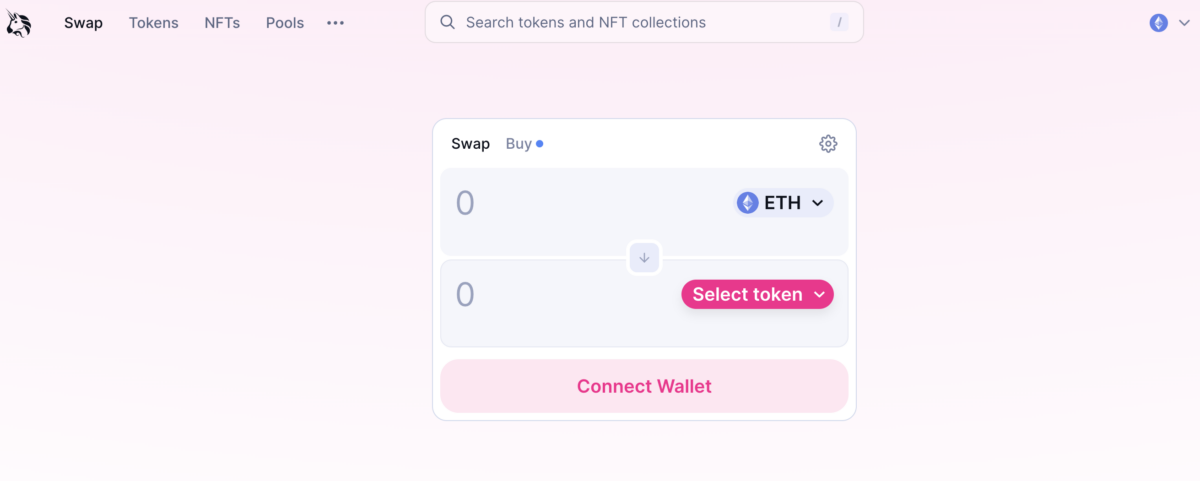
First, make sure you have a wallet such as Metamask or Coinbase Wallet. Then, if you don’t already have some, buy Ethereum or transfer it through another exchange to your wallet. After you have the amount you want to swap in ETH, open Uniswap.com and connect your wallet.

Uniswap Homepage screenshot
CREDIT: UNISWAP

Copy and paste $PEPE’s token address 0x6982508145454Ce325dDbE47a25d4ec3d2311933 and select Pepe Coin. Double-check to ensure you have the right coin and sign the transaction. Then, enter the amount of ETH you want to swap, and the amount of $PEPE will appear. Click “Swap” and sign the transaction.

Then, after a few moments, your Pepe Coin should be in your wallet.

The same process applies to different memecoins; all you have to do is swap out the token’s contract address. For example, if you were to buy $TURBO, you can access the contract on etherscan

Alternatively, certain memecoins, such as $SHIB or $DOGE, can be purchased directly on exchanges like Coinbase. Similarly, you can buy $PEPE through OKX or Binance.

Risks and concerns

Ready to buy? Before you do, it’s important to remember that while memecoins can lead to quick profits, they are also subject to sudden price fluctuations. This can make them risky investments and may not be suitable for everyone, particularly those who are risk-averse.

With every story you hear about someone who has made hundreds of thousands off a memecoin, there are also more people who have lost large amounts but just don’t advertise it on social media. In a thread by NFT_Doctor33, dozens of traders chimed in with their losses to demonstrate that the crypto space isn’t solely about constant gains and victories but also setbacks.

As these memecoins continue to evolve, it will be interesting to observe their impact on the broader cryptocurrency market. Whether coins like PEPE maintain long-term success or eventually give way to another trend, they have already secured a place in NFT history as a significant contributor to the crypto ecosystem.

Front-running bots, sandwich bots and the “mempool”

The title of this positing includes terms associated with blockchain and crypto, and many of you will have heard of them, but do you really know what they are, how they work, and the impact they can have on crypto trading?

Front-running is a bit like having “insider information” on a large trade that’s about to occur, which will drive the price of an asset up or down. Imagine knowing that next week, a huge company is going to invest in a smaller company on the stock market. The price of shares in the smaller company is currently tiny (let’s say $0.01 per share), but you know that as soon as the bigger company comes along and invests $500m in this company, it’s going to make the smaller share company soar to $2.00 per share. If you had your “unethical hat” on, then you could see that potentially buying some shares in that smaller company before next week, could provide an opportunity to make some profit, as you can purchase them now at $0.01 and sell them next week at $2.00

If you apply this example to the world of crypto trading, this is known as front-running, however the actual “insider information” is available for all the world to see…. you just need to be super, super quick to take advantage of it.

You see, when someone goes to a DEX to make a buy or sell order, no matter how big or small, the trade itself isn’t executed instantaneously. The speed of execution depends on the blockchain in question, but if we focus on the Ethereum Blockchain for the rest of this posting as an example, you’ll know (if you’ve ever traded with Ethereum) that there’s a delay between actually placing a trade, and the trade itself ultimately being “executed” and appearing on the blockchain.

Each Ethereum “block”, which is where all transactions have been added, takes around 12 seconds to be added to the chain. It doesn’t seem like a long time, however 12 seconds for a programmable script or “Bot” is a very long time to get things done!

So let’s explore what happens during that potentially 12-second period…

You place a trade, and the trade goes into the “mempool” — At a high-level, a mempool is basically a waiting room for pending transactions. They get sent to a node on the blockchain, and wait around before they are eventually processed and added to the blockchain.

In fact, there’s no guarantee that your transaction will even get processed in the current block. When the network is busy, you may even have to wait until the next block is processed, or even the block after that! In some cases, you might even be waiting over a minute for your transaction to get processed!

The interesting thing about mempools is that they are visible for all the world to see. Everything on a blockchain is public. Every transaction can be viewed. You can see the senders wallet address, the receiving wallet (or smart contract) address, the amount sent, etc.

So if you were a super-rich crypto “whale” trader, and wanted to buy $500m worth of Ethereum, then that pending trade will first go to the PUBLIC mempool, and wait around for a little while before it’s processed.

The other interesting thing about mempool is that they DO NOT operate on a “First-In-First-Out” (FIFO) basis.

If Bob and Mary both send a transaction Chris in the same block, and Bob sends his transaction 1 second before Mary, it doesn’t necessarily mean that Bob’s transaction will arrive at Chris’s wallet before Mary’s — How can this be? One of the critical factors is how much gas both Bob and Mary paid for their transaction.

You see, if Mary paid a significantly higher gas fee than Bob, then it’s highly likely that Mary’s transaction will arrive in Chris’s wallet before Bobs transaction.

When you use Metamask to make a transaction, you have the option to accept the default “Market Rate” gas fee, or instead edit the amount of gas you’d like to pay. You can see from the image below the estimated times for processing your transaction based on network conditions and current gas rates:

You don’t even have to accept one of the three default gas values…. you could reduce the amount of gas you want to pay to an amount even lower than the “low” value, although the risk of doing this is that the transaction takes a VERY long time to process, or potentially never get processed!

At the same time, you can pay a higher gas fee than “Aggressive” if you really want your transaction to get processed as soon as possible.

For all the transactions currently sat in the mempool, the transactions willing to pay the highest gas fee are the ones most likely to get processed first.

So going back to the example of Bob, Mary and Chris, you can see that if Mary paid a significantly higher amount of gas for her transaction than Bob did, her transaction is likely to reach Chris’s wallet before Bob’s transaction, even though Bob sent his transaction 1 second before Mary.

Front-Running Bots

With that information in mind, what if you knew the following information:

  1. A HUGE buy/sell transaction is sitting in the PUBLIC mempool, which will inevitably move the price of the asset once the transaction is processed
  2. This particular transaction was made using an average gas price, and it’s expected to take around 10 seconds to process

So what if you could create a “Bot” script that sits around all day, scanning the mempool, looking for huge (pending) transactions that will shift asset market prices, and when the “Bot” sees one of these transactions, it makes an instant transaction to buy the same asset, but pays a far higher gas fee?

You can probably see what will happen here! The “Bot” will receive the asset at the current price (probably still a low price) FIRST and then the huge transaction will get processed SECOND. By the time the Bot has received it’s asset at the low price, the new asset price (formed by the HUGE transaction) has now inflated the price, in which case the owner of the Bot can make a profit by selling the asset back to the market at the new higher price!

The smaller the pool, the bigger the impact

Up to this point I’ve described how you could use a bot for “front-running” a huge transaction that will move asset price, but it’s worth noting that this is based upon moving the price of an asset that is part of a huge liquidity pool.

For example, as of the time of writing this post, the USDC/ETH liquidity pool on Uniswap v3 sits at $221.94m

If you wanted to impact the asset price by just 0.1%, you have to spend $1.5m USDC!

But this is a huge liquidity pool, so it would require huge amounts to move the price. But what about smaller liquidity pools?

Imagine you were following a smaller crypto project that has been making steady progress, and starting to gain some attention. The current liquidity pool is small when compared to the USDC/ETH pool, and average daily transactions reflect this…. but then one morning a front-running bot spots a large transaction on this smaller project pair that will move price.

Here is an example of a fun new meme project on Ethereum called “Mouseworm”

Mouseworm logo

For this liquidity pair, you could impact the price of Mouseworm by over 20% by investing just $25,000 in the project.

So before this example trade is placed, 1 Mouseworm would cost $2.24 USDT, but after this $25,000 trade is placed, the price of 1 Mouseworm would be somewhere around $2.68. That’s a significant increase. So if you programmed a “Front-running” bot to place a trade (using more gas) than this $25,000 trade, then you could get the token at a lower rate than $2.68, and know that immediately after the bot makes the purchase, the rate will jump up considerably, potentially providing a sell opportunity at a profit.

This is why it’s not always necessarily a good thing to try and save on gas fees when trading on assets. When you next go to place a crypto trade on your phone, you might think that you’re not in any mad rush for your trade to go through, so you may as well just save some gas fees…..but there might be a bot watching what you’re doing, and preparing to front-run you!

No rush…. save some gas and just chill!

Sandwich bots

Sandwich bots use similar techniques, only they normally consist of a pair of trades (both a buy AND sell) which are carefully constructed and timed to form what is known as a “Sandwich Attack”.

not this kind of sandwich attack!

The sandwich attack involves placing two trades on a DEX, with the intention of profiting from the price movement that occurs BETWEEN the two trades. This process is a combination of “front-running” and “back-running”.

The first trade allows the bot to get the asset at a low price, as the real trade (executed after the bot’s trade due to not paying as much gas) will cause the price to go up.

The second trade will then execute immediately after the real trade to instantly sell the asset, before anyone even noticed. The attacker got in, made a profit, then sold the asset back to the market, all in the blink of an eye!

Whilst this would be practically impossibly for a human to do, sandwich bots on the other hand automate this process by continuously monitoring the order book of a DEX and placing the necessary trades at the appropriate times. They can be used to repeatedly profit from small price movements, and can be particularly effective when used on illiquid markets with low trading volumes.

What can be done?

There are some obvious ways to avoid front-running and sandwich bot attacks.

  1. The first is to trade within a large (or aggregated) liquidity pool. The likelihood of your trade moving market prices is miniscule, so the opportunity for a bot to profit from that trade (particularly when DEX fees are factored in) is negligible or doesn’t exist.
  2. Keep slippage low! If you set your slippage too high, then you are begging to be front-run! The slippage amount accounts for the likelihood of your trade succeeding or failing, and many crypto traders tend to set slippage too high as they are desperate to get hold of some tokens as the price is climbing fast and they don’t want to miss out. This could prove costly, and bots WILL take advantage of this!
  3. Pay Higher gas fees. If you want your transaction to get processed quicker than someone else, you’ll generally have to pay more gas than the competition. It’s usually better to pay more gas and keep slippage low, rather than the other way round.
  4. Make multiple low value orders rather than one big order. Bot developers are smart and they’ve already factored in gas fees, slippage, asset price etc., so there comes a point when a bot simply won’t try to execute a front-running trade, because it won’t be profitable when fees have been accounted for. In contrast, if you’re making a big trade on a smaller liquidity pool, the changes of the bot making a decent profit increase substantially.
  5. Use a reputable DEX — Most of the leading DEX exchanges include features such as quick matching, randomized transaction processing, trade match engines and periodic auction matching to minimize the odds of front-running.

Instadapp Turns on DeFi Automation, Powered by Gelato Network

Auto-refinance your debt position between Maker, Aave & Compound to avoid getting liquidated

Instadapp and Gelato are joining forces to release Instadapp Actions, a new service that is being rolled out today to Instadapp’s nearly 25,000 users and counting. As the first use case, users will be able to enjoy automated debt refinancing between various DeFi lending protocols to prevent costly collateral liquidations.

As one of the world’s most advanced decentralized crypto assets management platforms, Instadapp aims to make complex cross-protocol transactions simple and seamless. Up until today, Instadapp has managed more than $500 million crypto assets across leading protocols like MakerDAO, Aave, Compound, and Uniswap.

We all know that the crypto world is 24/7, but with the help of Instadapp and Gelato, this brand new service allows you to automate an important aspect of your crypto investing strategy. Using Instadapp Actions, you will finally be able to sleep peacefully at night again.

Why Instadapp Actions Is the Service That We All Have Been Waiting For?

So you finally figured out how the flash loan works, took out a DAI loan on MakerDAO using your ETH as collateral, and spent the DAI you just got on buying even more ETH. You thought ETH would go straight to the moon, and you were just about to order your Lambo from the car dealership. But in the middle of the night, the ETH price started crashing, and your debt position got undercollateralized.

As much as we want to become savvy investors, we physically can’t spend day and night optimizing our interest payments while keeping our collateral secure from liquidations by moving it from one protocol to another to avoid a hefty liquidation penalty. That’s where Instadapp Actions come in, which automatically refinances our debt and helps our portfolio reduce its liquidation price, so we don’t have to worry about the last-minute market volatility ever again.

What Does It Really Mean to the DeFi User — You?

As a DeFi user, you will benefit from paying the lowest possible interest rates on your DAI debt on MakerDAO while at the same time being able to capitalize on the significantly lower collateral requirements on protocols such as Aave and Compound.

“I believe refinancing automation will be one of the most used features to secure ETH-A vaults as it saves users from liquidation without selling any Ethereum. Automating Instadapp’s DeFi smart accounts with Gelato will enable many more equally powerful use cases in the future.” — Samyak Jain, Co-founder and CTO of Instadapp

Gelato Network — a decentralized network of bots, will refinance your position before it can get liquidated on one of the protocols to help you avoid having to pay the liquidation penalty.

Gelato and Instadapp will do the heavy lifting for you, monitoring prices and automatically reacting to changes in the ETH price. We know you have a busy life, and we want to make sure that your portfolio stays on track, so you can focus on whatever is more important to you or just relax.

The assets stored in your Instadapp DeFi Smart Account will be moving fully autonomous between the most liquid lending protocols, such as MakerDAO, Aave, and Compound, based on where the most favorable liquidation prices are for your debt position.

“Decentralized automation is one of the missing pieces of DeFi and blockchain today, using Gelato, projects like Instadapp can finally do it in an easy, reliable, and trustless way.” — Matthieu Marie Joseph, Legendary Member at Gelato Network

Ready to refinance your auto loan? Go to http://defi.instadapp.io/makerdao and try Instadapp Actions now.

About Instadapp

Instadapp is a DeFi portal that aggregates the major DeFi protocols using a smart wallet layer and bridge contracts to make complex cross-protocol transactions simple and seamless. Up until today, Instadapp has served and managed over $500 million in crypto assets across leading DeFi protocols like Maker, Aave, Compound, and Uniswap.

About Gelato Network

Gelato Network is Web3’s premier automation network, enabling developers to automate a wide variety of arbitrary smart contract executions on and across all EVM-based compatible blockchains such as Ethereum. Examples of use cases developers have built on top of Gelato include Limit Orders on AMMs like Uniswap, automatic compounding of yield farming vaults, Aave liquidation protection, MakerDAO debt ceiling updates, automated liquidity management, and even the petting of Aavegotchis.

Our ultimate goal is to automate everything and by giving developers the reliable tools they need to do this, we can empower their users to get the most out of their Web3 experience.